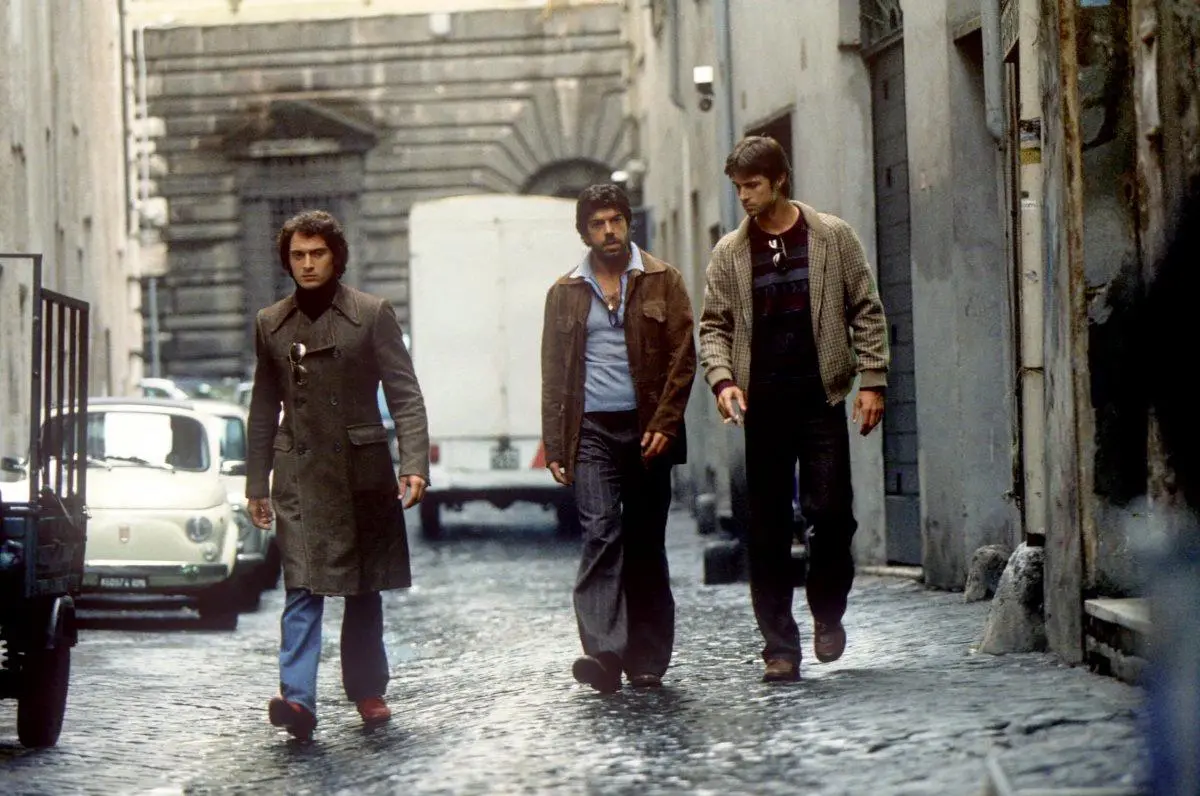
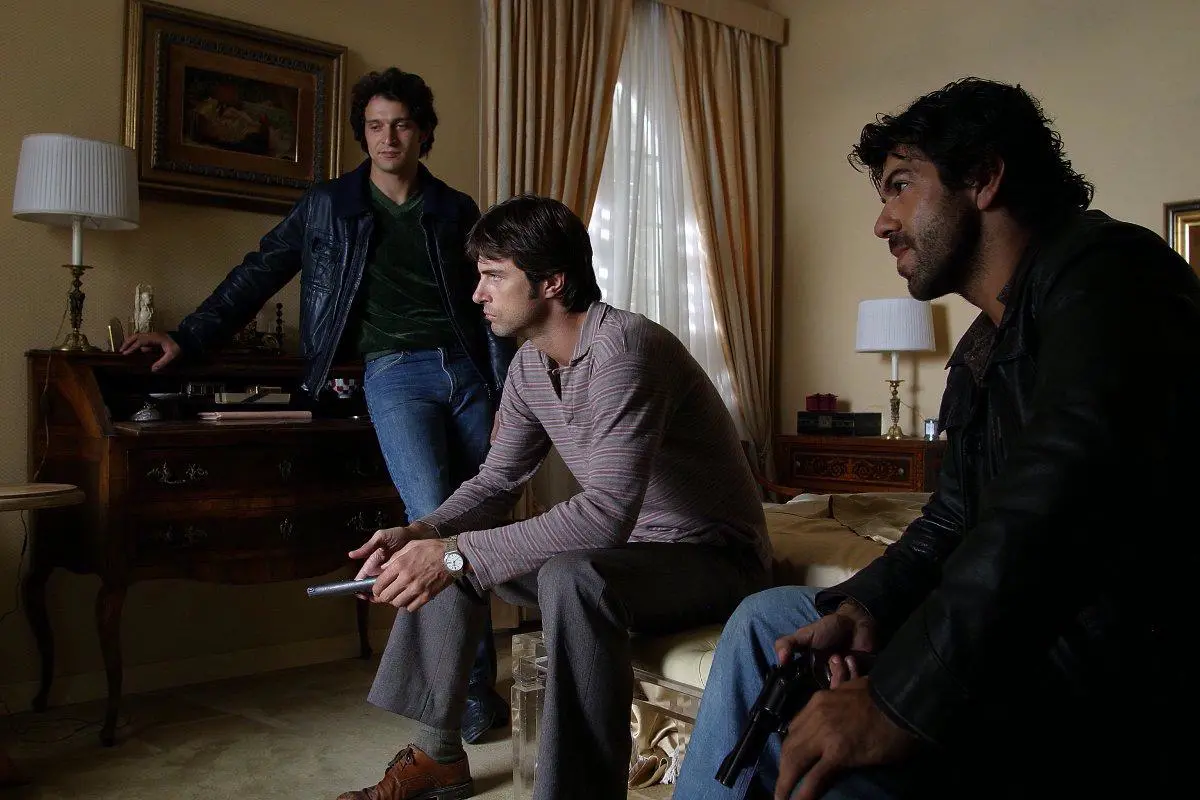
Four kids entertain themselves with daring adventures: during one of these, they steal a car, run over a policeman and escape to their hideout, a caravan on the dunes of Capocotta beach. Later in life, the four form a criminal gang with the aim of conquering Rome. Most of the film was shot in the neighbourhoods of Magliana, Garbatella, Trastevere and Monteverde.
The external façade of Patrizia’s brothel is villino Cirini, in via Ugo Bassi, Monteverde. Freddo’s brother and Roberta live in the same housing estate in Garbatella. The house of Terribile, which later becomes Lebanese’s, is Villa dell’Olgiata 2, in the area of Olgiata north of Rome, while Freddo lives in via Giuseppe Acerbi, in the Ostiense neighbourhood, not far from where Roberta’s car blows up in via del Commercio, in the shadow of the Gazometro.
Terribile is executed on the steps of Trinità dei Monti. Leaning on the rail overlooking the archaeologial ruins in largo Argentina, Lebanese and Carenza talk about the kidnap of Aldo Moro. The Church of Sant’Agostino where Roberta shows Freddo Caravaggio’s Madonna dei Pellegrini is the location for several key scenes in the film. Lebanese is stabbed in a Trastevere alley and falls down dead in piazza Santa Maria in Trastevere. The hunt for Gemito ends in a seafront villa in Marina di Ardea-Tor San Lorenzo, on the city’s southern shoreline, where he is murdered. Forced to hide, Freddo finds refuge in a farmhouse in Vicarello, hamlet of Bracciano.
A scene which opens over the altare della Patria and the Fori Imperiali introduces the end of the investigation into Aldo Moro’s kidnap, followed by repertory images of the discovery of his body in via Caetani. The many real events included in the fictional tale include the bomb attack at the station of Bologna at 10:25 am, 2 August 1980: in the film, both Nero and Freddo are in Piazzale delle Medaglie d’Oro several seconds before the bomb explodes.
Commissioner Scaloja, who is investigating the gang, takes a fancy to Patrizia: they stroll near the Odescalchi Castle in Ladispoli. He finds out if his feelings are reciprocated when, several scenes later, he finds her in a state of confusion near Castel Sant’Angelo.
Four kids entertain themselves with daring adventures: during one of these, they steal a car, run over a policeman and escape to their hideout, a caravan on the dunes of Capocotta beach. Later in life, the four form a criminal gang with the aim of conquering Rome. Most of the film was shot in the neighbourhoods of Magliana, Garbatella, Trastevere and Monteverde.
The external façade of Patrizia’s brothel is villino Cirini, in via Ugo Bassi, Monteverde. Freddo’s brother and Roberta live in the same housing estate in Garbatella. The house of Terribile, which later becomes Lebanese’s, is Villa dell’Olgiata 2, in the area of Olgiata north of Rome, while Freddo lives in via Giuseppe Acerbi, in the Ostiense neighbourhood, not far from where Roberta’s car blows up in via del Commercio, in the shadow of the Gazometro.
Terribile is executed on the steps of Trinità dei Monti. Leaning on the rail overlooking the archaeologial ruins in largo Argentina, Lebanese and Carenza talk about the kidnap of Aldo Moro. The Church of Sant’Agostino where Roberta shows Freddo Caravaggio’s Madonna dei Pellegrini is the location for several key scenes in the film. Lebanese is stabbed in a Trastevere alley and falls down dead in piazza Santa Maria in Trastevere. The hunt for Gemito ends in a seafront villa in Marina di Ardea-Tor San Lorenzo, on the city’s southern shoreline, where he is murdered. Forced to hide, Freddo finds refuge in a farmhouse in Vicarello, hamlet of Bracciano.
A scene which opens over the altare della Patria and the Fori Imperiali introduces the end of the investigation into Aldo Moro’s kidnap, followed by repertory images of the discovery of his body in via Caetani. The many real events included in the fictional tale include the bomb attack at the station of Bologna at 10:25 am, 2 August 1980: in the film, both Nero and Freddo are in Piazzale delle Medaglie d’Oro several seconds before the bomb explodes.
Commissioner Scaloja, who is investigating the gang, takes a fancy to Patrizia: they stroll near the Odescalchi Castle in Ladispoli. He finds out if his feelings are reciprocated when, several scenes later, he finds her in a state of confusion near Castel Sant’Angelo.
Copyright: Warner Bros
Claudio Santamaria, Pierfrancesco Favino, Kim Rossi Stuart
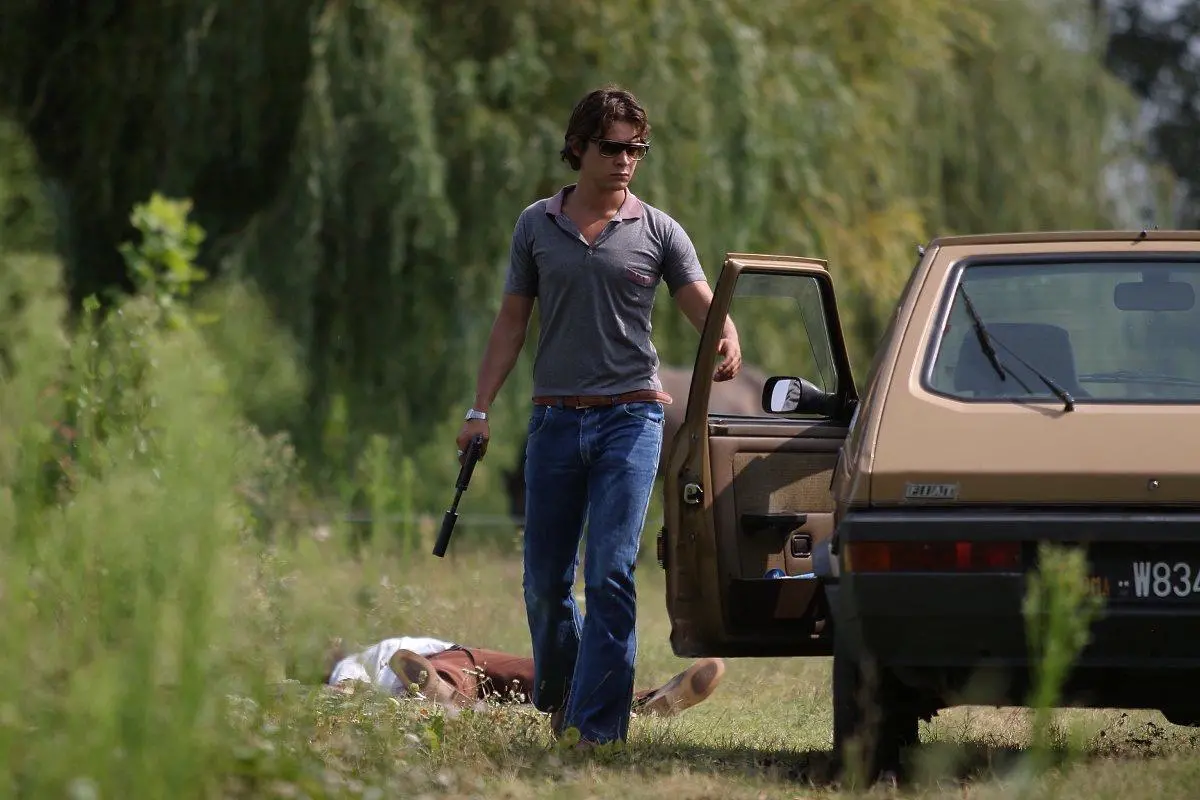
Copyright: Warner Bros
Riccardo Scamarcio
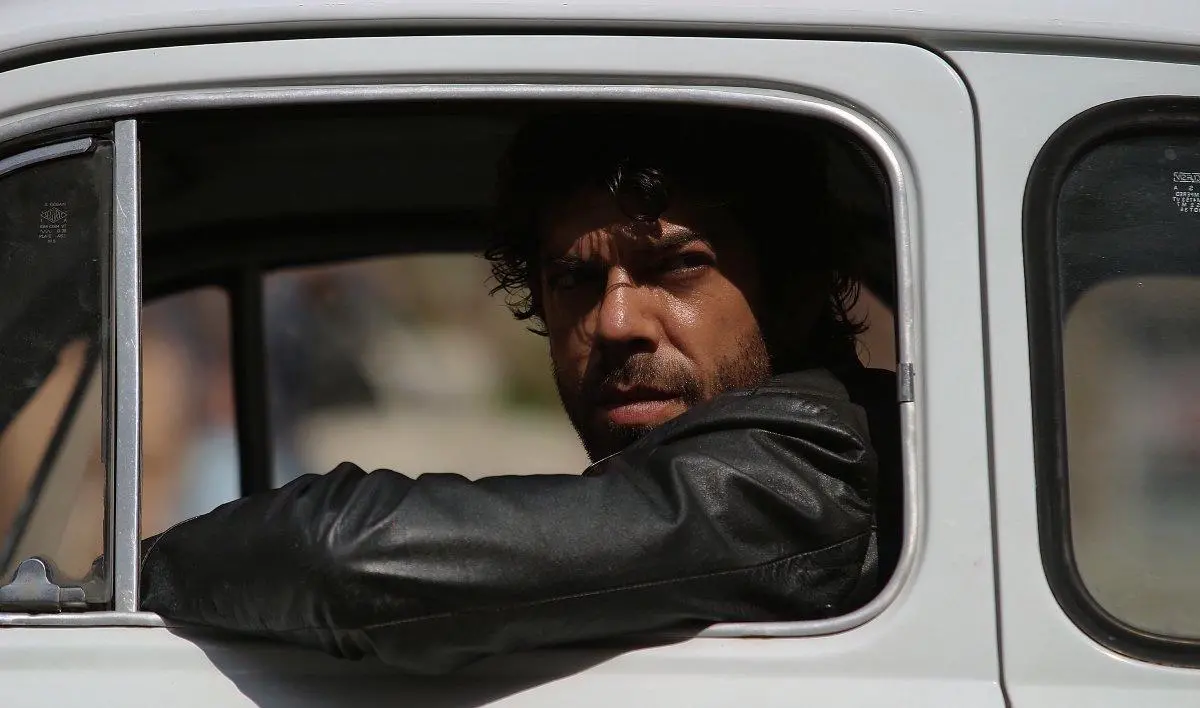
Copyright: Warner Bros
Pierfrancesco Favino
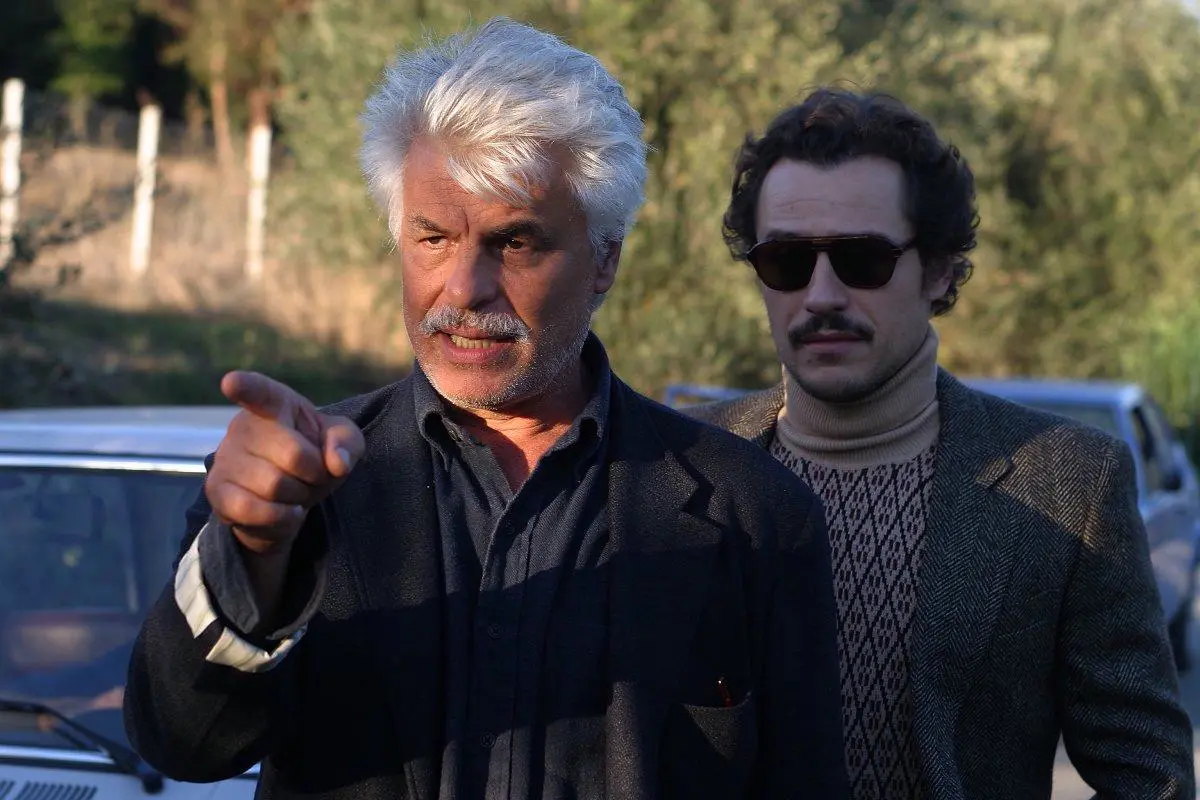
Copyright: Warner Bros
Michele Placido, Stefano Accorsi
Copyright: Warner Bros
Claudio Santamaria, Kim Rossi Stuart, Pierfrancesco Favino
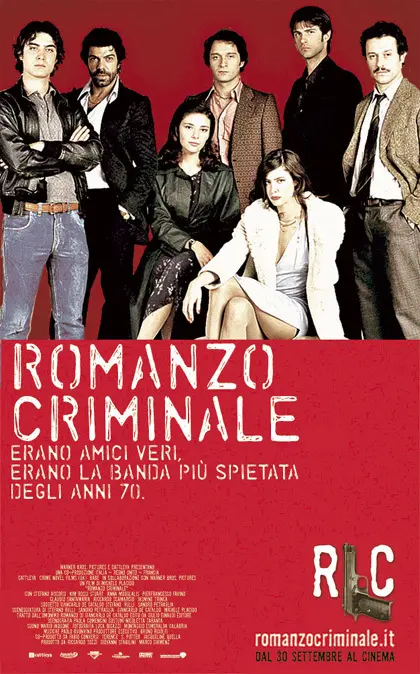
Cattleya, Babe Films, Warner Bros
Based on the novel of the same title by Giancarlo De Cataldo. The activities of the “Banda della Magliana” and its successive leaders (Libanese, Freddo, Dandi) unfold over twenty-five years, intertwining inextricably with the dark history of atrocities, terrorism and the strategy of tension in Italy, during the roaring 1980’s and the Clean Hands (Mani Pulite) era.
Lunch at – grey pea soup with smoked pork knuckle, washed down with kvass. No tourists. Only a railway worker, a priest, and a woman reading a newspaper printed in Latgalian script. I try to read a headline: “Sātai vaļā” – roughly, “The heart is open.” Yes, I think. That’s the key. Day 2: The Lake Circuit – By Bicycle Through Liquid Silence Rented a battered “Ardis” bicycle from a garage near Rēzekne’s bus station. Destination: the Rāzna National Park , specifically the 30-kilometer loop around Lake Rāzna – the second largest lake in Latvia, but the clearest. The route is called “Zilais loks” (The Blue Loop). V3’s true test.
I leave the bike at a wooden jetty near (Cloud Mountain). The hill is only 40 meters high, but from the top, Lake Rāzna spreads like a shattered mirror. Islands dot it – 13, according to legend, one for each of Christ’s disciples minus Judas. The water today is not blue. It is grey-blue , the color of a storm petrel’s wing, or a soldier’s winter coat. A cold wind from Belarus. I sit for an hour. No phone signal. No sound except the klunk-klunk of a distant fishing boat’s engine.
I sleep that night in a homestay in (yes, the Russian name remains on some signs). The hostess, Irēna, serves sklandrausis – a sweet-savory carrot-and-potato pie, baked in a wood oven. We eat by candlelight. She says: “Latgale nav vieta. Latgale ir laiks.” (Latgale is not a place. Latgale is time.) Day 3: Daugavpils – The Fortress, The Mark Rothko, and The Unbroken A morning bus south to Daugavpils. The city is often called “the least Latvian city” – majority Russian-speaking, industrial, blunt. V3’s challenge: to find its hidden tenderness.
Walk from the fortress to – an Orthodox cathedral of brick and five gold domes. Unlike Rīga’s tidy churches, this one is raw. Inside, no pews. Worshippers stand. Women kiss icons. A deacon chants in Old Church Slavonic. I light a candle for my grandmother, who fled Eastern Europe in 1944. The flame trembles. So do I. latgale trip v3
Inside, V3’s first discovery: a room dedicated to . Not the polite folk pottery of tourism brochures, but fierce, glazed figures – horses with human eyes, demons with three heads, jugs shaped like pregnant women. A sign reads: “Keramika – runājošais māls” (Ceramics – speaking clay). I buy a small bowl, unglazed on the outside, cobalt-blue within. The vendor, an elderly man with one tooth and two world wars in his posture, says: “Tas ir Latgale. Smags ārpusē, dziļš iekšpusē.” (Hard on the outside, deep inside.)
The asphalt ends after 6 km. Gravel begins. Then, pure dirt. But the reward: the village of , population 37. Its Old Believers’ prayer house is a masterpiece of unadorned faith – no icons in gold, only hand-painted wooden saints, their faces eroded by candle smoke. An Old Believer named Agafya invites me in. She speaks Russian, but writes a word in my notebook: “Pokayaniye” – repentance. Not sorrow, she explains. “The act of turning around.” Latgale is full of such turning points.
I stay only three hours. But I leave with a truth anyway: Latgale is not a destination. It is a method – a way of being present in a world that prefers speed. The 6:47 AM train from Rēzekne to Rīga. Same route, but reversed. The lakes now appear on the left. The grandmother with the doilies is gone. Instead, a young soldier heading to base, reading a thriller in Russian. A nun eating an apple. A child drawing a house with a blue roof. Lunch at – grey pea soup with smoked
Walk on, then. Into the blue-grey. October 2026 | Rīga–Rēzekne–Rāzna–Daugavpils–Aglona–Jaunsloboda
An elder named Timofei invites me into his izba. He serves sbiten (a honey-spice tea) and shows me a handwritten prayer book from 1789. He asks: “Why do you come here, to the end of the road?” I say: “To understand slowness.” He nods. “Then you must stay three days. One day is curiosity. Three days is truth.”
Aglona is to Latgalian Catholics what Mecca is to Muslims. The basilica, built in 1760, is baroque but humble – white, twin towers, a statue of the Virgin on the roof. Inside, the famous icon of Aglona Mother of God (painted 1698) is covered in votive offerings: silver hearts, crutches, wedding rings. Mass is in Latgalian – a language that sounds like Latvian spoken underwater, soft and guttural at once. I am not religious, but when the choir sings “Esi sveicināta, Marija” , I feel what the anthropologists call hierophany – a rupture of the ordinary. I try to read a headline: “Sātai vaļā”
I skip the city center’s chain cafes. Instead, I take tram #3 to , a working-class district on the old Polish border. Here, wooden houses lean into each other. A bar called “Pie Alekseja” serves piva (beer) and šprotes (sprats) on black bread. The clientele: factory workers, a retired KGB officer (he tells me; I don’t ask), and a young Latgalian poet named Zane. She recites a line from memory: “Mūsu valoda ir migla / Mēs elpojam cauri vēsturei” (Our language is fog / We breathe through history). She gives me a photocopied chapbook. Price: a promise to read it on the train home. Day 4: The Sacred Triangle – Aglona, Andrupene, and The Old Believers’ Island No bicycle today. A hired car (€35, driver Jānis, who chain-smokes and listens to Latgalian folk metal). Destination: the holy triangle of Latgale.
This is the account of 120 hours in Latgale, October 2026. A journey by diesel train, rented bicycle, and foot. A journey into the blue-grey. Rīga’s central station at 6:47 AM. The train to Rēzekne – the region’s unofficial capital – is an electric marvel by EU standards, but inside, the spirit is Soviet: worn velvet seats, windows that fog with collective breath, a samovār (tea boiler) that gurgles like a dying accordion. I choose a compartment with a Latgalian grandmother crocheting doilies. She doesn’t speak Latvian – only Latgalian and Russian. I understand one word: “ezeri” (lakes).
At the window, the landscape blurs. But Latgale holds. It is the water mother in my bones. The unglazed bowl in my bag. The promise to Zane the poet, kept now.
Lunch at – grey pea soup with smoked pork knuckle, washed down with kvass. No tourists. Only a railway worker, a priest, and a woman reading a newspaper printed in Latgalian script. I try to read a headline: “Sātai vaļā” – roughly, “The heart is open.” Yes, I think. That’s the key. Day 2: The Lake Circuit – By Bicycle Through Liquid Silence Rented a battered “Ardis” bicycle from a garage near Rēzekne’s bus station. Destination: the Rāzna National Park , specifically the 30-kilometer loop around Lake Rāzna – the second largest lake in Latvia, but the clearest. The route is called “Zilais loks” (The Blue Loop). V3’s true test.
I leave the bike at a wooden jetty near (Cloud Mountain). The hill is only 40 meters high, but from the top, Lake Rāzna spreads like a shattered mirror. Islands dot it – 13, according to legend, one for each of Christ’s disciples minus Judas. The water today is not blue. It is grey-blue , the color of a storm petrel’s wing, or a soldier’s winter coat. A cold wind from Belarus. I sit for an hour. No phone signal. No sound except the klunk-klunk of a distant fishing boat’s engine.
I sleep that night in a homestay in (yes, the Russian name remains on some signs). The hostess, Irēna, serves sklandrausis – a sweet-savory carrot-and-potato pie, baked in a wood oven. We eat by candlelight. She says: “Latgale nav vieta. Latgale ir laiks.” (Latgale is not a place. Latgale is time.) Day 3: Daugavpils – The Fortress, The Mark Rothko, and The Unbroken A morning bus south to Daugavpils. The city is often called “the least Latvian city” – majority Russian-speaking, industrial, blunt. V3’s challenge: to find its hidden tenderness.
Walk from the fortress to – an Orthodox cathedral of brick and five gold domes. Unlike Rīga’s tidy churches, this one is raw. Inside, no pews. Worshippers stand. Women kiss icons. A deacon chants in Old Church Slavonic. I light a candle for my grandmother, who fled Eastern Europe in 1944. The flame trembles. So do I.
Inside, V3’s first discovery: a room dedicated to . Not the polite folk pottery of tourism brochures, but fierce, glazed figures – horses with human eyes, demons with three heads, jugs shaped like pregnant women. A sign reads: “Keramika – runājošais māls” (Ceramics – speaking clay). I buy a small bowl, unglazed on the outside, cobalt-blue within. The vendor, an elderly man with one tooth and two world wars in his posture, says: “Tas ir Latgale. Smags ārpusē, dziļš iekšpusē.” (Hard on the outside, deep inside.)
The asphalt ends after 6 km. Gravel begins. Then, pure dirt. But the reward: the village of , population 37. Its Old Believers’ prayer house is a masterpiece of unadorned faith – no icons in gold, only hand-painted wooden saints, their faces eroded by candle smoke. An Old Believer named Agafya invites me in. She speaks Russian, but writes a word in my notebook: “Pokayaniye” – repentance. Not sorrow, she explains. “The act of turning around.” Latgale is full of such turning points.
I stay only three hours. But I leave with a truth anyway: Latgale is not a destination. It is a method – a way of being present in a world that prefers speed. The 6:47 AM train from Rēzekne to Rīga. Same route, but reversed. The lakes now appear on the left. The grandmother with the doilies is gone. Instead, a young soldier heading to base, reading a thriller in Russian. A nun eating an apple. A child drawing a house with a blue roof.
Walk on, then. Into the blue-grey. October 2026 | Rīga–Rēzekne–Rāzna–Daugavpils–Aglona–Jaunsloboda
An elder named Timofei invites me into his izba. He serves sbiten (a honey-spice tea) and shows me a handwritten prayer book from 1789. He asks: “Why do you come here, to the end of the road?” I say: “To understand slowness.” He nods. “Then you must stay three days. One day is curiosity. Three days is truth.”
Aglona is to Latgalian Catholics what Mecca is to Muslims. The basilica, built in 1760, is baroque but humble – white, twin towers, a statue of the Virgin on the roof. Inside, the famous icon of Aglona Mother of God (painted 1698) is covered in votive offerings: silver hearts, crutches, wedding rings. Mass is in Latgalian – a language that sounds like Latvian spoken underwater, soft and guttural at once. I am not religious, but when the choir sings “Esi sveicināta, Marija” , I feel what the anthropologists call hierophany – a rupture of the ordinary.
I skip the city center’s chain cafes. Instead, I take tram #3 to , a working-class district on the old Polish border. Here, wooden houses lean into each other. A bar called “Pie Alekseja” serves piva (beer) and šprotes (sprats) on black bread. The clientele: factory workers, a retired KGB officer (he tells me; I don’t ask), and a young Latgalian poet named Zane. She recites a line from memory: “Mūsu valoda ir migla / Mēs elpojam cauri vēsturei” (Our language is fog / We breathe through history). She gives me a photocopied chapbook. Price: a promise to read it on the train home. Day 4: The Sacred Triangle – Aglona, Andrupene, and The Old Believers’ Island No bicycle today. A hired car (€35, driver Jānis, who chain-smokes and listens to Latgalian folk metal). Destination: the holy triangle of Latgale.
This is the account of 120 hours in Latgale, October 2026. A journey by diesel train, rented bicycle, and foot. A journey into the blue-grey. Rīga’s central station at 6:47 AM. The train to Rēzekne – the region’s unofficial capital – is an electric marvel by EU standards, but inside, the spirit is Soviet: worn velvet seats, windows that fog with collective breath, a samovār (tea boiler) that gurgles like a dying accordion. I choose a compartment with a Latgalian grandmother crocheting doilies. She doesn’t speak Latvian – only Latgalian and Russian. I understand one word: “ezeri” (lakes).
At the window, the landscape blurs. But Latgale holds. It is the water mother in my bones. The unglazed bowl in my bag. The promise to Zane the poet, kept now.